



In South Florida, mango season doesn’t need much introduction. The fruit shows up everywhere this time of year, from backyard trees to restaurant menus. These dishes and drinks illustrate how chefs across Miami are using mangoes to bring balance, contrast, and a sense of place to the plate or glass.

Pauline at The Shelborne by Proper
At this new South Beach restaurant, mango makes an impact, starting with Mango Heat, a cocktail that combines Lalo Blanco Tequila, fino sherry, mango, chili, lime, and club soda in a build that stays dry and focused. Mango shows up elsewhere on the menu, including a carrot-based mocktail with mango and bergamot, and an heirloom tomato salad finished with mango and chicharrones.

Michael’s Genuine Food & Drink
At Michael’s Genuine, mango season takes over the kitchen. “One of the reasons I love mango season is that it’s so unique to South Florida,” chef and owner Michael Schwartz says. “I’ll often unload hundreds of pounds of fruit onto the team and challenge them to use it in all sorts of ways, from savory dishes to cocktails to preserving it for later.” In past years, mango has made its way into wood-roasted prawns brushed with a mango-habanero glaze, green mango salads with peanuts and nuoc cham, and desserts like tres leches finished with fresh mango and coconut cream. A highlight for the 2026 mango season is the red snapper crudo, which pairs thin slices of local fish with mango, basil, coconut milk, chili oil, and crispy rice.

Cry Baby Creamery
Cry Baby Creamery goes straight to a Miami classic. The Mango Bocadito riffs on the traditional Cuban bocadito de helado, with soft sponge cake lightly crusted in sugar and pressed around a thick layer of house-made mango ice cream. Sourced at peak ripeness from DanDee Mango Farm, the mango comes through fragrant and fully developed without needing anything extra. This dessert is only available when the mangoes are ripe—and it disappears just as quickly.

KoKo by Bakan
At KoKo by Bakan, mango is worked into an aguachile that already comes in sharp. Shrimp is dressed with lime, cilantro, celery, and peppers, building heat and acidity before the fruit is folded through. Cut into small pieces, the mango lands in bursts, breaking up the citrus and heat without dulling either.

Pura Vida
Beat the heat with Pura Vida’s Iced Mango Matcha, which combines ceremonial-grade matcha with a house-made mango-pineapple purée blended until smooth. The fruit is fully worked in, softening the bitterness of the matcha and giving the drink a rounder edge without weighing it down.
Mottai
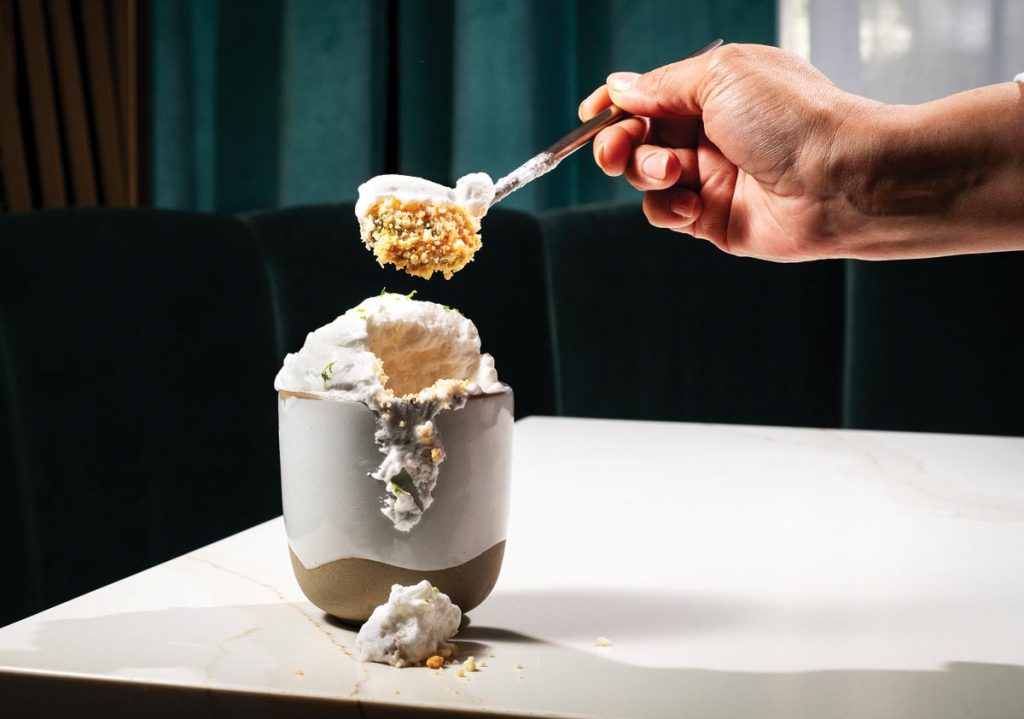
At Mottai, the starting point is a traditional Japanese egg custard, usually savory and served warm at breakfast time. Chef Brian Nasajon keeps the technique intact but shifts the direction by serving it as a dessert. The custard is steamed until just set, giving it that signature silky texture, with mango worked into the base instead of dashi. Kiwi and passion fruit bring acidity, and a light cream topping references the lid the dish is typically served under. “It’s unexpected, but very intentional,” Nasajon says.

Ghee Indian Kitchen
At Ghee Indian Kitchen, mango runs through the menu. Chef Niven Patel harvests the fruit from his Rancho Patel farm and then integrates it into multiple dishes. It shows up in a cardamom-heavy mango lassi, a brie and truffle naan served with a sensational Kashmiri chutney, and cocktails like the tequila-spiked Mo’garita.

The Mango Economy
Each summer, Wynwood’s Zak the Baker invites locals to trade in ripe mangoes for fresh bread, turning backyard surplus into a fruitful exchange. The resulting mangoes are worked into house-made jams and a rotating lineup of sweets, from Basque-style cheesecake to mango concha, a Mexican sweet bread filled with fresh mango cream and finished with a streusel topping. The system is simple: bring in a handful of good mangoes (no blemishes) and leave with a loaf. What started as a small, community-driven idea has settled into a seasonal ritual, one that reflects just how seriously Miami takes its mangoes.









Facebook Comments