


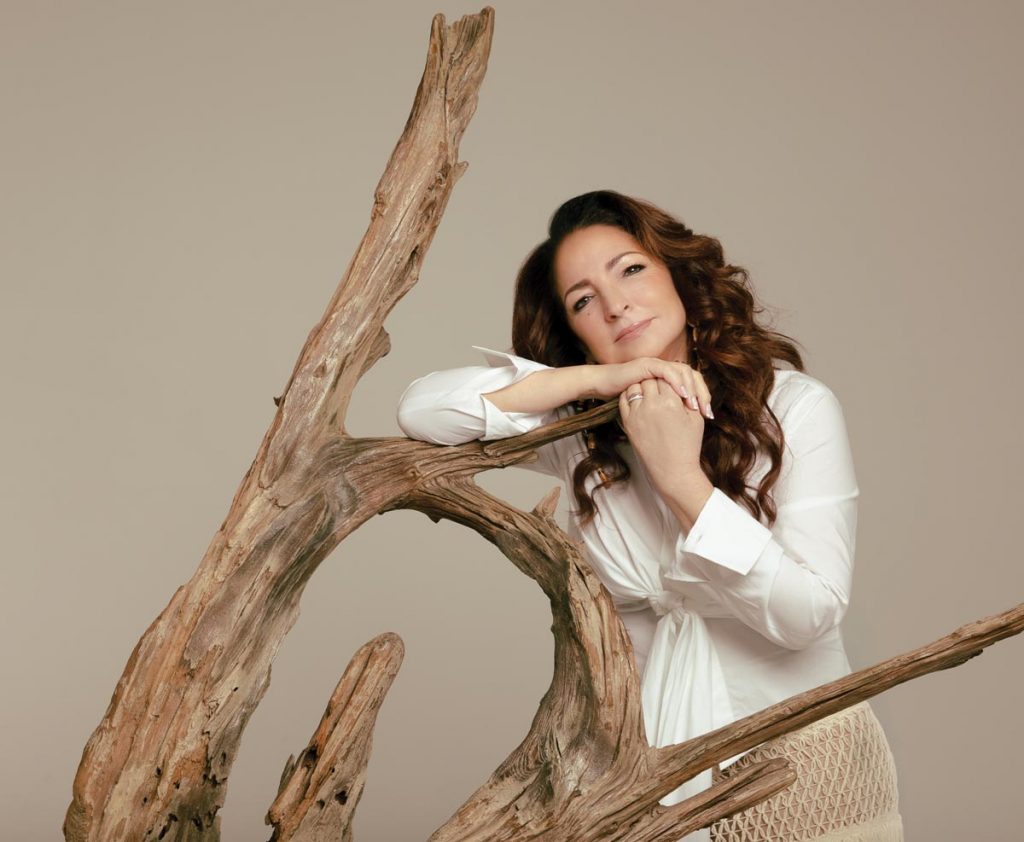
Miami’s favorite songstress celebrates 50 years of making music with her new album, Raíces, a return to her roots both literally and figuratively. Aventura caught up with Gloria Estefan to talk about releasing her first Spanish language album in 18 years, her love for the Magic City, and the advice she’d give her younger self.
Aventura: How did your earliest memories of music in Miami influence your sound?
Estefan: My parents brought me here from Cuba when I was a toddler. My musical references then were the records from my mom’s collection from Cuba that her mother would smuggle in boxes of baby food sent via pilots with Cubana de Aviacion. Later, when we could afford to eat at a local diner called The Dog House (near Flagler and 37th), as a young child I would listen to all the selections in the tiny jukeboxes on each table: rock-and-roll hits, Nat King Cole, and all the crooners. These songs made an indelible mark that I would carry with me always. When my father joined the U.S. Army and we were sent to San Antonio, Texas, Elvis was at the top of the charts and I would listen to his records and go see his movies. Then we came back to Miami when I was in the fifth grade. The British Invasion hit me full force as did the songs of Carole King, Elton John, and Stevie Wonder. If there was a music scene [in Miami], I didn’t know about it until I actually became a part of it when I joined the Miami Latin Boys (later known as the Miami Sound Machine) in 1975 at the age of 17. I quickly learned the Latin music the band already played (I had grown up listening to my mom’s recordings of Celia Cruz, Cachao, and Orquesta Aragon), and I then injected my love of Brazilian, pop, and disco music.
When you joined the Miami Sound Machine, did you imagine Latin music could become commercially popular, especially within the broader American population?
I always believed that Latin music had a far reach because I was watching Desi Arnaz sing and speak in Spanish on I Love Lucy, one of the most popular shows on television at that time. I believed that the acceptance of that show was proof positive of listeners’ openness to Latin music. In the ’70s, a Spanish group called Mocedades had a top 10 hit (in Spanish) on the pop music charts with the song “Eres Tu,” and I also saw first-hand the reactions of our Miami Sound Machine audiences and their acceptance of all the rhythms we played.
Miami has been at the heart of your life and career. How has the city shaped who you are?
Miami is my home! I can’t imagine living anywhere else, and I am of the opinion that we live in paradise. I’ve had the privilege of growing up sharing a city with so many different cultures, being in beautiful sunshine all year, hearing multiple languages being spoken, and surrounded by a vibrant musical tapestry. All of this has definitely shaped who I am. I doubt my career or the music I have made would be the same had I grown up elsewhere.

What inspired you to create Raíces?
Now more than ever, I appreciate my roots and the culture that my mother instilled in me and made sure that we kept alive and thriving—and which Emilio and I have also instilled in our children and grandson. Since Cuban rhythms and music were my first influences and was what I sang in the band when I joined in 1975, it feels like I am coming full circle after having been able to explore so many rhythms that are also a part of my musical vocabulary and journey. I also feel it is an important moment to celebrate who we are and express ourselves proudly in our native tongue.
Raíces means “roots” in Spanish. What does that word mean to you in the context of this album?
In Emilio’s and my family, there are different roots or cultural backgrounds. His mother was from Galicia, Spain, and his father from Batroun, Lebanon. My grandfather on my mother’s side was from Asturias, Spain, but they were all raised in Cuba. I believe that every human is a complex amalgamation of cultures from all over the world. Being aware of who we are and where we come from only strengthens our connections as human beings, allowing us to see ourselves reflected in other people, which leads to better understanding. Music, to me, is one of the greatest connectors we have as humans. We don’t need to have a deep knowledge about it to appreciate it and have it bridge the divides that we encounter. On this album, Emilio and I are sharing our own musical and cultural roots, which inform the lyrics and express parts of who we are through music.
How did your approach to making Raíces differ from past projects you’ve been a part of?
On previous projects, I spent time writing the songs, producing the tracks, and then recording them in the studio. Because I’ve been focused on writing the songs for a new, original musical called Basura with my daughter, Emily, Emilio asked me if I would trust him with writing this album for me. I gave him a resounding “Yes” and told him I actually loved his idea. I felt it would be a beautiful opportunity for him to create what I now believe to be his musical masterpiece. Rather than creating demos, Emilio produced what would end up being the complete tracks for this album. As he was producing them, he would pass them to on to me, sung by amazing singers in the studio. Because I was able to listen to them for over a year, by the time I went in the studio to record them myself I knew the songs backwards and forwards. The songs were embedded under my skin; I didn’t even have to read the lyrics while singing, which gave me an incredible freedom to have fun, play with the phrasing, and emote to my heart’s content.
What was the emotional journey like for you singing such personal songs on this album?
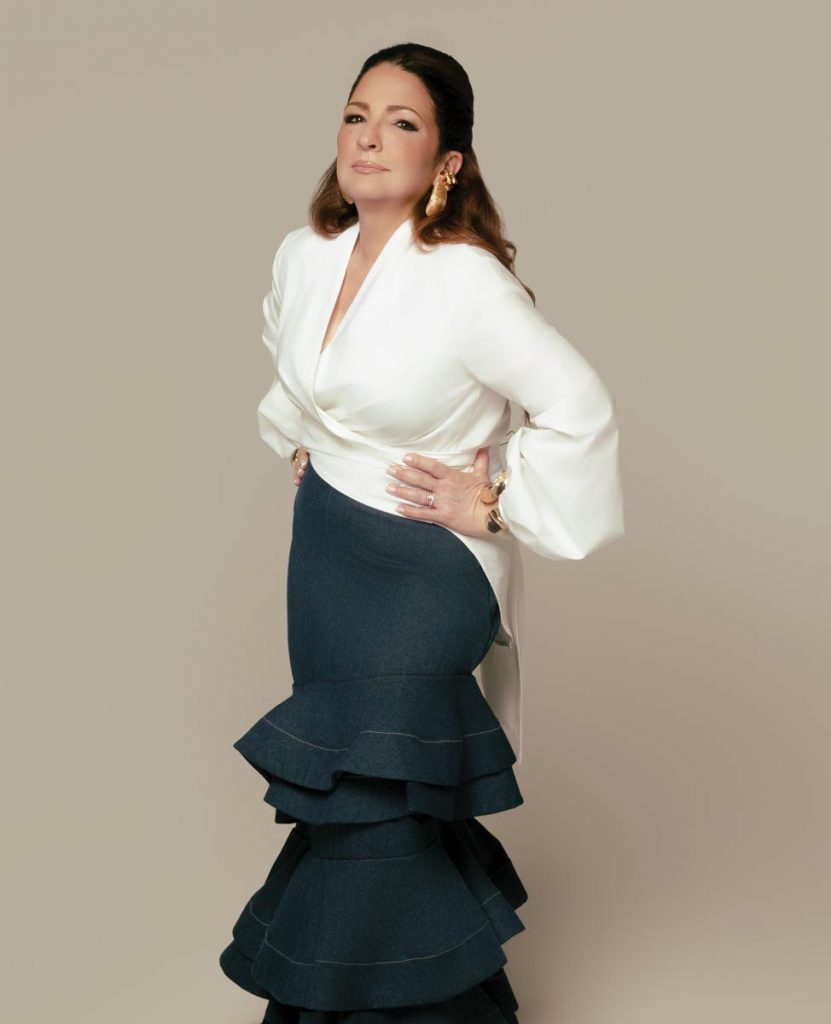
The lyrical content is very autobiographical. In the case of the only complete song I wrote for the album, “My Beautiful Boy/Mi Ñiño Bello” (a song written for and dedicated to our grandson, Sasha), I got so emotional singing it that I had to stop and come back the next day to complete it. I teared up on a few other songs as well because of their deeply personal nature, like “Cuando El Tiempo Nos Castiga,” which I knew Emilio had written after the passing of his father, and “Como Paso,” a love song that Emilio wrote for me (even though I’m the one singing it to him).
You’ve been a bridge between Latin music and mainstream pop. Do you see Raíces as a return, a new chapter, or a full-circle celebration of your role in the music world?
Undoubtedly, Raíces has been a return to the charts and radio; we feel blessed and so happy to see the incredibly positive and supportive response it has garnered worldwide. But for me, it is definitely a full-circle celebration of my 50 years in the music world. I am eternally grateful for being able to live a life making music and having it build bridges throughout our beautiful and very complicated world.
What do you hope listeners take away from Raíces?
I hope listeners feel the very honest emotions that run through the music and lyrics. I hope that they are able to make it a part of their own celebrations and significant moments. It is a privilege for us to hear about our music becoming a part of people’s lives. We don’t take that honor lightly. It makes me incredibly happy to see people still dancing to and enjoying our music!
This album marks your fiftieth career anniversary. How did working on Raíces help you reconnect with parts of yourself—musically or personally—that you hadn’t explored in a while?
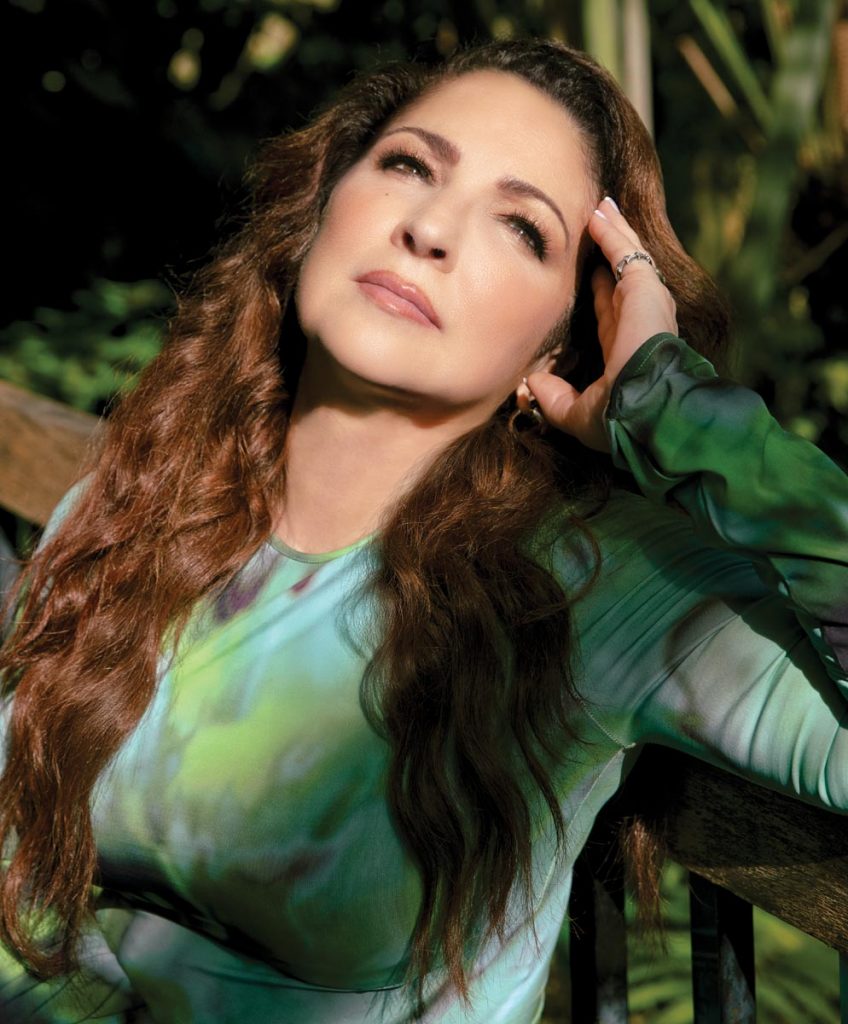
For me, this album was a joyful exploration of the rhythms that have brought me so much enjoyment and satisfaction throughout my career and exemplifies the happiness Emilio and I feel in creating new songs that will, hopefully, also become a part of people’s lives. I had felt that connection again when I did “Bemba Colorá” with Sheila E. and Mimi Succar; we were so blessed to have won a Grammy for that performance. When I was going to sing that song in the studio, I prayed to Celia Cruz and asked her to help me do her justice with my performance. That experience reminded me of how much I love singing that genre.
After such a long and influential career, did Raíces offer any new lessons about your own voice or artistry?
I felt very joyous and very free during the creation of this album. Perhaps it was due to the 50 years of experience I have under my belt, or maybe it was due to the very personal nature of the lyrics, rhythms, and connections to my personal musical life experience. But, as I say to my children often, every day that we live should teach us something until the day we are no longer here.
If this album had one central message to the world, what would it be?
The one message that Emilio and I hope resonates with the listener is that love is one of our most important and true connections. Learning to love unconditionally should be our goal in life—love for another human being, love for our country or countries, and for our cultural and musical roots that only enrich us.

You’ve broken so many barriers for Latin artists in mainstream American music. How do you reflect on that role today?
Emilio and I feel that it’s an incredible honor and privilege to be able to share our thoughts and creative ideas with others through our music. Whenever we’ve been able to offer support to other artists to share their artistic vision we have done so. We are happy if our careers and music have helped nudge open that door a bit more so that other artists can walk through—just like the careers of Desi Arnaz, Carlos Santana, and José Feliciano, among others, did for us.
What does success mean to you today, compared to when you were first starting out?
To me, success has always meant being able to get up each day excited for what’s ahead and to be able to do what makes us happy. Success is also being able to enjoy beautiful and deep friendships and family relationships and to be able to be of service to others.
If you could give your 20-year-old self a piece of advice, what would it be?
I would say, “Please relax and enjoy the ride. Nothing is as earthshaking as you believe it to be. Be in the moment, because that’s the only thing that is a guarantee.” Also, “There’s no such thing as perfection, so trust in what you have to offer and don’t fret so much.”
Looking back, what do you consider the defining moment of your music career?
There have been too many defining moments in different ways to be able to choose only one. But meeting Emilio changed the course of both my musical and personal life, so I think that would qualify as the most defining moment, because meeting him actually made my musical career a possibility.








Facebook Comments