



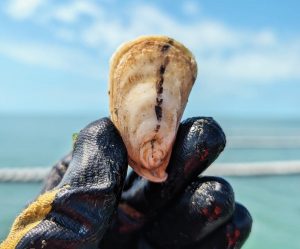
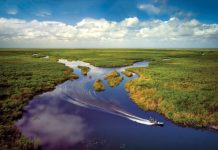
Once a staple of Gulf ecosystems and coastal culture, wild oysters have all but disappeared from South Florida waters, leaving behind empty reefs and a lingering perception problem. Everglades Oysters is working to change that. With a 74-acre aquaculture lease deep in the Everglades and a direct-to-chef model that prioritizes speed and traceability, the company is betting on South Florida as an unlikely but compelling oyster capital—with their oysters landing at tables at Sunny’s Steakhouse, The River Oyster Bar, Klaw Miami, and Maple & Ash. We spoke with co-founder Joshua Wilkie, who, alongside co-founder Fabio Galarce, sees something different: a chance to put local oysters back on the map.
Aventura: The Gulf oyster has been written off by many. What made you believe it could not only come back, but compete with some of the best oysters in the world?
Wilkie: I think the Gulf never lost its potential; it just lost its reputation. Most of that came from how oysters were harvested and handled, not the water itself. When you control the process start to finish, you unlock a completely different product. We’re growing oysters in warm, nutrient rich water that allows them to develop incredible flavor quickly. Once chefs taste them side by side, the bias fades pretty fast. It’s about showing what was always possible.

You’re farming in one of the most complex ecosystems in the country. What does it look like to grow oysters in the Everglades day-to-day?
It’s real work. Long runs out through the mangroves, weather always changing, and everything takes more planning because you’re remote. Day to day, we’re out on the lease flipping cages, grading oysters, checking growth, managing fouling, and staying on top of water conditions. The FlipFarm system lets us do most of it on deck, which is huge, but you’re still dealing with heat, storms, and logistics every single day. It’s not romantic, but it’s rewarding. You’re watching a living system work. Every oyster out there is filtering water and improving the environment while it grows.
You’ve built a zero-inventory, direct-to-chef model. Oysters are still in the water when they’re ordered. How does that approach reshape freshness and the way Miami restaurants think about sourcing?
It flips the whole model. Most seafood sits in a supply chain. Ours doesn’t. Chefs place orders, we harvest specifically for them, and those oysters are on their menu within a day or two of leaving the water. That changes everything. Texture, salinity, shelf life, all of it is better. But more than that, it creates a connection. Chefs know exactly where their oysters came from, when they were harvested, and who grew them. It turns oysters from a commodity into something personal.
You’re also restoring reefs and reintroducing oyster culture to South Florida. What does success look like for you five or 10 years from now?
Success is scale with impact. On the farm side, we’re producing tens of millions of oysters a year and making South Florida a real origin on the map. On the environmental side, we’re recycling shells and putting them back into the water to rebuild reefs that have basically disappeared here. Five to 10 years out, I want oysters filtering billions of gallons of water off this coast again, not just from farms but from restored reefs. If we do this right, we’re helping to bring back an ecosystem and a food culture that used to exist here and should again.








Facebook Comments