



November marks Native American Heritage Month and, in South Florida, that means celebrating the proud traditions of the Miccosukee Tribe.
Long before Miami’s skyline and sandbars became international icons, the Miccosukee called this land home. Originally based in North Florida, the tribe was pushed south into the Everglades during the 1800s and adapted to the “River of Grass” by creating hammock-style camps. Fiercely independent, the tribe avoided assimilation for nearly a century, later earning international recognition in 1959 after a historic visit to Cuba and formal U.S. acknowledgment in 1962.
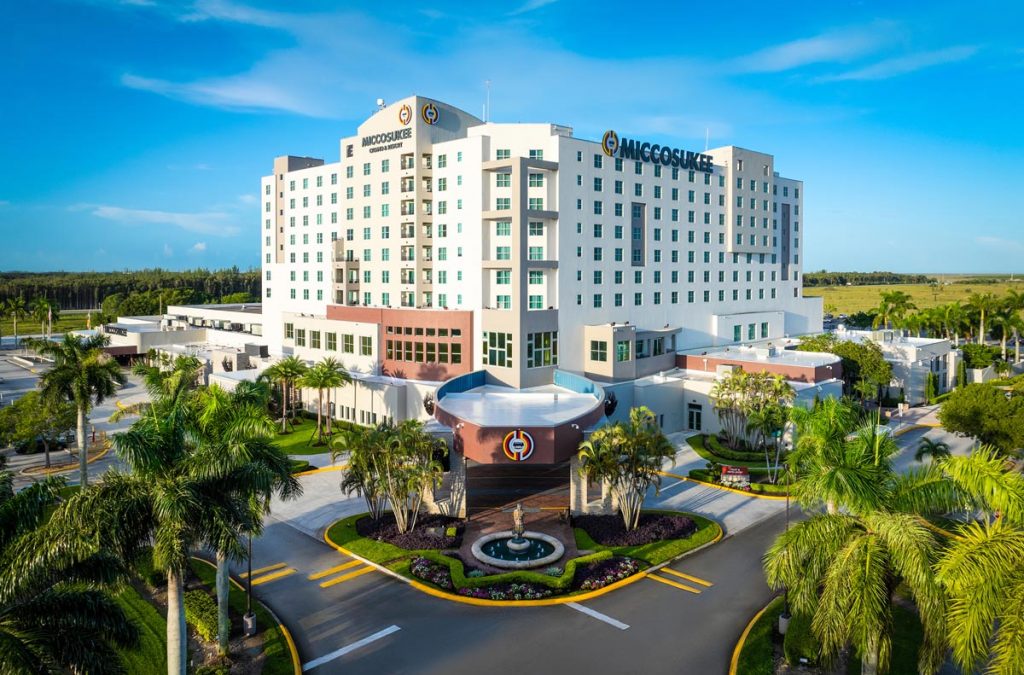
Today, the Miccosukee remain woven into South Florida life, with a reservation on Tamiami Trail and enterprises ranging from a casino and service plaza to a cultural village, gift shops, and guided Everglades tours. Visitors can experience the culture firsthand by exploring the Miccosukee Indian Village, which hosts crafts, alligator demonstrations, and exhibitions of traditional patchwork clothing and wood carvings. Annual events such as the Miccosukee Indian Arts & Crafts Festival showcase authentic food, music, and artistry that spotlight the tribe’s identity.

Chairman Talbert Cypress, who has led the Miccosukee Business Council since 2021, emphasizes that the tribe’s contributions extend far beyond cultural tourism. “We’ve been here since time immemorial,” he says. “As Miami has grown, so has the tribe; we’ve done that hand in hand. It’s important for everyone to understand how significant the tribe is to the economy. Tribal members have their businesses in Miami, and they spend and invest in Miami.”
That presence is rooted in a legacy of leadership. “Our tribe was the first tribe to establish self-determination,” Cypress explains. “We were the first tribe to get that signed off on. We went to Washington to lobby for it, and it was granted to us. The Miccosukee Tribe is at the forefront of practicing our sovereignty.”
Looking ahead, the chairman is focused on both innovation and preservation. “Economically, we’re trying to take the casino into a new era where we cater to and grow our base in the community,” he says. “As chairman of the tribe, I established the Archive Department to focus on our history. The next step is to develop language programs that will help solidify our language among younger generations.”

For Cypress, South Floridians can play a vital role in honoring that history. “South Floridians can best support us by understanding our history,” he notes. “Once they understand who we are and where we come from, it can be more helpful for them to understand the stances we take on environmental and political issues. We’re here to help and contribute positively to our community.”
And when it comes to the future? Cypress puts it simply: “We are focusing on our younger people, as they are the future of our tribe. We always listen to our elders and want to ensure that the younger generations can succeed and carry on the culture for years to come.”









Facebook Comments